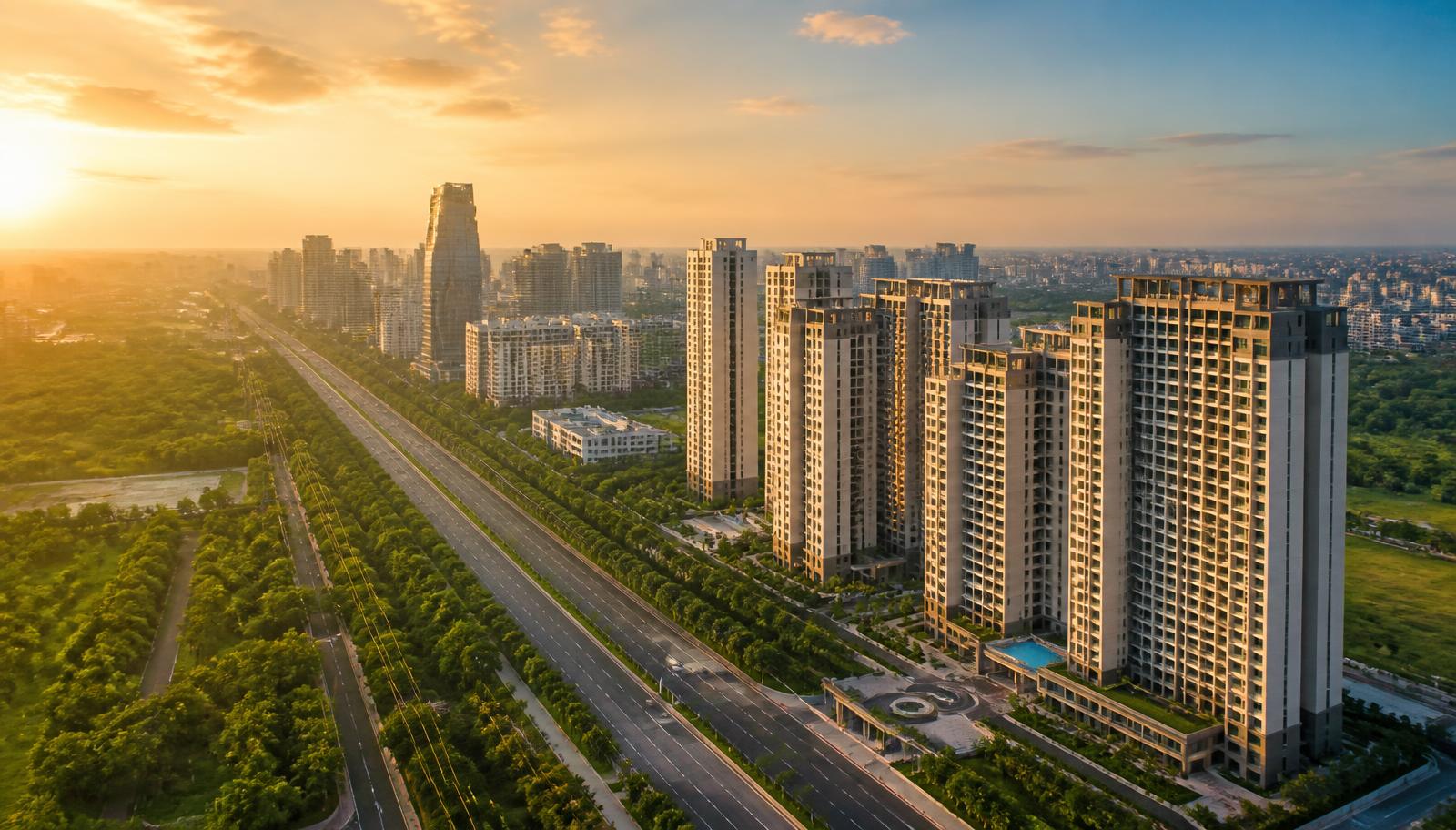
Investment Guide
Top 10 Luxury Residential Projects in Gurgaon (2026)
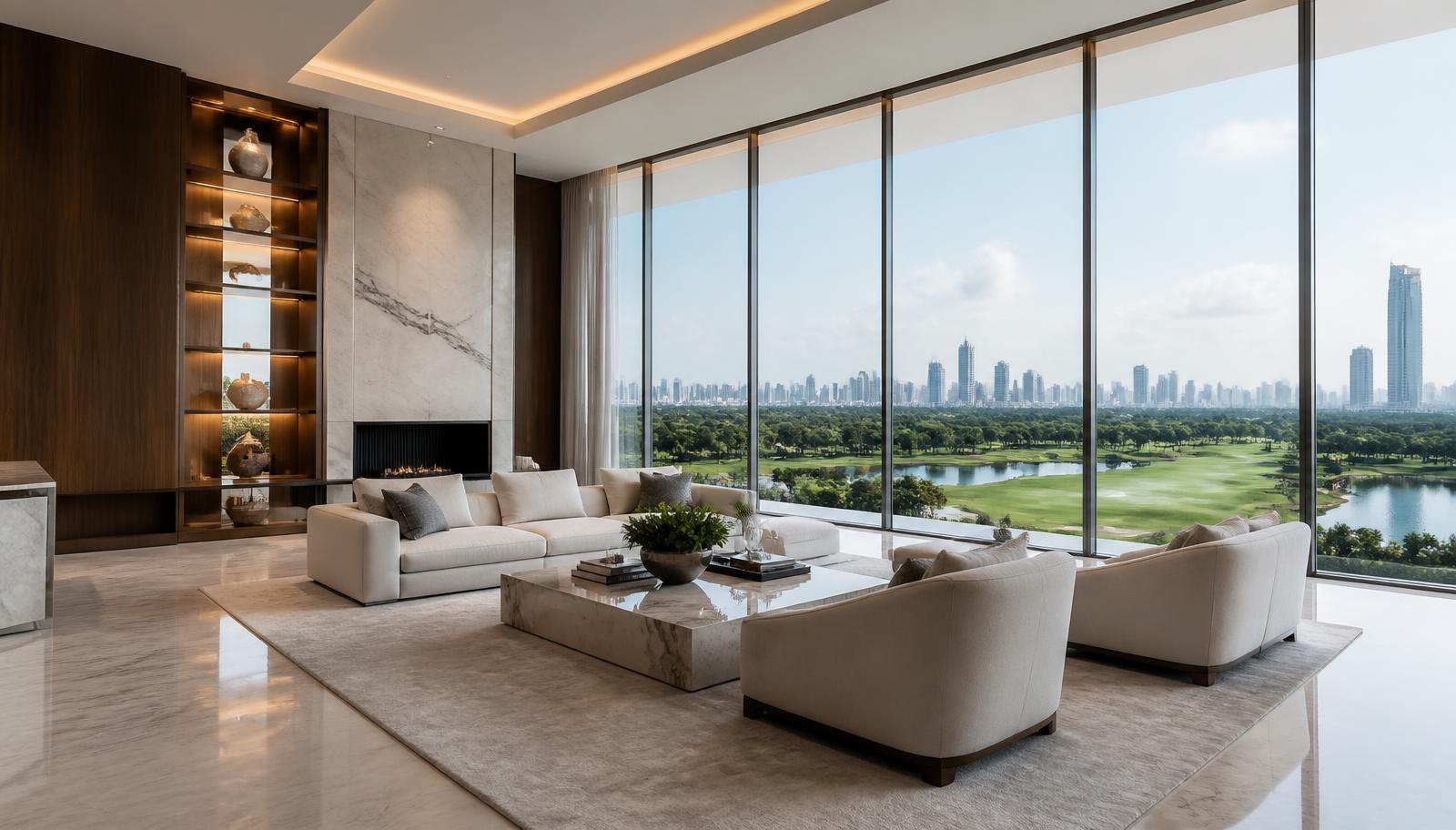
Branded residences, ₹10 Cr+ ticket sizes and 5,000+ sqft floor plates — the projects redefining luxury in Gurgaon.
1. DLF The Dahlias — Golf Course Road
The current benchmark. 7,000–16,000 sqft units, private lift lobbies, 12-acre landscape, ₹75–200 Cr ticket size.
2. DLF The Camellias
The blue-chip luxury address. 7,500+ sqft, 4–5 BHK, resale at ₹100 Cr+.
3. M3M Golf Estate
Golf-course facing, 5,000+ sqft, mature community, resale-heavy market.
4. Trump Towers Delhi NCR (M3M)
Branded residences with a global name — 4,700 sqft 4BHKs, private club, resale at ₹15–20 Cr.
5. Krisumi Waterfall Residences
Indo-Japanese design language, Sector 36A, 3–4 BHK from 2,500 sqft.
6. Sobha City / International City
Sohna Road and Sector 108 — Sobha's engineering-first construction quality.
7. Godrej Aristocrat / Zenith / Vrikshya
Sector 49, Sector 89 and 103 — Godrej's premium play.
8. Signature Global Titanium SPR
Sector 71 SPR — new-luxury entrant with strong pre-launch demand.
9. Smartworld One DXP
Dwarka Expressway's marquee luxury launch — sky villas and duplexes.
10. Elan The Presidential
Sector 106 — waterfront-themed luxury on Dwarka Expressway.
What separates luxury from ultra-luxury in Gurgaon
Luxury (₹4–12 Cr) means 2,500–4,500 sqft, imported fittings, a 40,000–80,000 sqft clubhouse and concierge services. Ultra-luxury (₹15 Cr+) adds private lift lobbies, 5,000–16,000 sqft floor plates, three-side open planning, VRV/VRF climate systems, staff quarters, wine rooms and a resident-to-staff ratio approaching 1:1. The technical marker to look for is structural: ultra-luxury towers use post-tensioned slabs and unitised double-glazed façades that ordinary premium projects skip.
Resale and rental behaviour of luxury stock
Golf Course Road ultra-luxury rents at ₹5–15 L per month with near-full occupancy from expat and CXO tenants — yields sit at 1.8–2.5%, so the case is capital preservation, not income. Resale timelines stretch to 4–9 months because the buyer pool is small, but price discovery is transparent: society-level per-sqft benchmarks are widely tracked and rarely break below the last three transactions.
Due diligence specific to the luxury segment
Check the maintenance charge (₹9–18 per sqft per month at this level — a 6,000 sqft unit can cost ₹1.1 L monthly before electricity), the sinking fund balance, whether the club is developer-owned or transferred to the RWA, the tower's façade warranty period, and the actual delivered-versus-brochure specification list from residents already in possession. In ultra-luxury, the gap between brochure and handover is the single largest source of buyer disappointment.
Budget bands and where to look
₹4–7 Cr: Sector 65–69 Golf Course Extension, SPR and select Dwarka Expressway towers. ₹7–15 Cr: DLF Privana, M3M Golf Hills, Sobha Altus, Trevoc Royal Residences. ₹15 Cr and above: DLF Camellias, DLF The Dahlias, Aralias and Magnolias resale, and select penthouse inventory on Golf Course Road.
How amenities are actually costed into the price
In ultra-luxury towers, roughly 8-15% of the total project cost goes into amenities beyond the apartment shell — clubhouse construction, landscaped acreage, water bodies, imported lift systems and dedicated staff infrastructure — and this cost is fully embedded in the per-sqft rate you pay, not billed separately at purchase. Buyers should ask for the clubhouse-to-tower ratio (sqft of amenity space per apartment) as a comparative metric across shortlisted projects, since two projects at similar ₹/sqft can differ hugely in delivered amenity depth. Post-handover, the amenities also drive the ongoing maintenance bill, so a larger, more elaborate clubhouse is not free lifestyle upgrade — it is a recurring cost embedded for the life of your ownership.
Construction quality markers specific to the luxury segment
Look for post-tensioned slab construction (reduces slab thickness and allows larger column-free spans, common in true ultra-luxury towers), double or triple-glazed unitised façade systems (better acoustic and thermal insulation than standard curtain walls), VRV/VRF centralised climate control rather than individual split ACs, and dedicated service lifts separate from resident lifts so daily deliveries and staff movement don't share the primary lobby experience. Ask to see these specifications in the sanctioned drawing, not just the sales brochure — some projects marketed as ultra-luxury use standard curtain-wall glazing and individual split units, which materially changes both the living experience and long-term energy costs.
Branded residences — what the brand actually delivers
International branded residences (Trump-branded towers, and other global hospitality-linked residential products entering Gurgaon) typically license the brand name and design guidelines to the developer rather than the global entity directly managing the building, so due diligence should focus on the actual construction developer's track record, not just the brand name on the hoarding. Buyers should verify what specific services the brand license includes — concierge standards, interior design guidelines, or simply naming rights — since the difference between a fully brand-managed building and a brand-licensed one is significant for long-term service consistency and resale positioning.
Financing considerations unique to high-ticket purchases
Loans above ₹5 Cr require more extensive income and net-worth documentation, and several private banks cap LTV lower (60-65%) for ultra-high-value properties compared to standard residential lending norms, meaning buyers should plan for a larger equity component upfront. Some banks also require a personal net-worth statement and CA-certified income documentation beyond standard salary slips for self-employed or business-owner buyers at this ticket size. NRIs purchasing ultra-luxury inventory should factor in that international wire transfers above certain thresholds trigger additional compliance documentation from both the remitting and receiving bank, which can add 1-2 weeks to closing timelines if not planned in advance.
Floor-plate efficiency — the metric brochures don't volunteer
Two ultra-luxury towers quoting an identical per-sqft rate can deliver meaningfully different usable space once you account for the loading factor — the ratio of super/saleable area to actual carpet area. In some luxury towers with expansive lobbies, wide corridors and generous service cores, the loading factor can run as high as 1.45-1.55, meaning a 5,000 sqft saleable unit delivers closer to 3,300-3,500 sqft of actual usable carpet. Since the Real Estate Act mandates carpet-area disclosure, always ask for this figure explicitly rather than accepting the saleable-area-only quote in the brochure, and compare loading factors across your shortlist — a lower-loading project effectively gives you more livable space for the same headline price.
Private elevator and lobby configurations compared
The highest tier of ultra-luxury towers offer a private lift lobby serving one or two apartments per floor with biometric or key-card-restricted access, effectively giving each resident a semi-private entry experience; the next tier down offers a shared lobby serving four to six apartments per floor with a staffed concierge desk but no private lift access; and premium-but-not-ultra-luxury towers use a standard shared lobby model serving eight or more units per floor. This distinction materially affects both daily living experience and resale positioning — buyers should physically visit at a busy hour (weekday evening) to see how the lobby and lift-wait experience actually functions under real occupancy, since a sparsely occupied sample tower during a site visit doesn't reveal genuine peak-hour wait times.
Staff quarters, service floors and daily operational logistics
Ultra-luxury towers above roughly 4,500 sqft typically include a dedicated staff room within the unit or on a shared service floor, along with a separate service lift and service staircase used for daily help, deliveries and maintenance movement — this keeps the primary lobby and lift experience uncluttered but requires the building's facility management to actively enforce which lift domestic staff and delivery personnel use, which is a common friction point in the first year of occupancy before RWA rules stabilise. Ask an existing resident specifically how this is enforced day to day, since a well-designed service floor on paper can still function poorly if the facility management team doesn't actively manage staff movement patterns.
How ultra-luxury resale pricing actually gets negotiated
Unlike mid-segment resale where price anchors closely to the last two or three registered transactions, ultra-luxury resale negotiation is more idiosyncratic because each unit's specific floor, view, corner-facing status and interior fit-out condition creates wider price dispersion — two apartments of identical size in the same tower can transact 15-25% apart based on floor and view alone. Serious ultra-luxury buyers typically engage a specialist broker with recent transaction visibility in that specific tower rather than relying on general market data, and sellers should expect the marketing and negotiation cycle to run four to nine months given the naturally smaller buyer pool at this price point.
A realistic total cost-of-ownership projection over five years
On a ₹15 Cr, 6,000 sqft ultra-luxury apartment: maintenance at ₹15/sqft/month runs roughly ₹90,000 monthly or ₹10.8 L over five years; property tax, though modest in Haryana relative to global peers, still adds a recurring annual line item; a comprehensive home insurance policy for a high-value interior fit-out is worth budgeting ₹40,000-80,000 annually depending on the sum insured; and periodic interior refresh (repainting, appliance replacement, fabric refresh in high-touch areas) is realistic to budget at 3-5% of the original interior fit-out cost every five years. Buyers underwriting the 'true' cost of ultra-luxury ownership should build a five-year total-cost model rather than looking only at the acquisition price and headline maintenance rate.
Frequently asked
- What is the most expensive residential project in Gurgaon?
- DLF The Dahlias and DLF Camellias command the highest per-square-foot rates in Gurgaon, in the ₹80,000–₹1.8 L/sqft range, followed by Aralias and Magnolias in the resale market.
- Are luxury apartments in Gurgaon a good investment?
- They preserve capital exceptionally well and appreciate steadily, but rental yields are low at 1.8–2.5% and resale takes longer. Buy luxury for use and wealth preservation; buy mid-premium inventory for yield.
- What monthly maintenance should I expect in a luxury project?
- Budget ₹9–18 per sqft per month. A 4,000 sqft apartment therefore carries ₹36,000–72,000 a month before electricity and staff costs.
- What does clubhouse-to-tower ratio mean and why does it matter?
- It's the amenity space per apartment, and it's a useful way to compare delivered lifestyle quality across projects at similar price points since a bigger clubhouse also means a bigger ongoing maintenance bill.
- Are branded residences in Gurgaon actually managed by the global brand?
- Usually the brand licenses its name and design guidelines to a local developer rather than directly managing the building, so due diligence on the actual construction developer matters more than the brand name itself.
- What loan-to-value can I get on a ₹10 Cr+ apartment in Gurgaon?
- Many private banks cap LTV at 60-65% for ultra-high-value properties versus the standard 75-80%, so plan for a larger upfront equity contribution on high-ticket purchases.
- How can I tell if a luxury project actually has premium construction quality?
- Check the sanctioned drawings for post-tensioned slabs, double or triple-glazed façades, VRV/VRF climate systems and separate service lifts — brochures alone often overstate the delivered specification.
- What is a loading factor and why does it matter for luxury apartments?
- It's the ratio of saleable (super) area to actual carpet area; luxury towers with wide lobbies and generous service cores can carry loading factors of 1.45-1.55, meaning you get noticeably less usable space per saleable sqft than a more efficiently designed tower at the same price.
- Do all luxury towers in Gurgaon offer private lift lobbies?
- No — only the highest ultra-luxury tier offers a private lift serving one or two units per floor; the next tier down uses a staffed shared lobby for four to six units, and premium-but-not-ultra-luxury towers use standard shared lobbies for eight or more units.
- How long does it typically take to resell an ultra-luxury apartment in Gurgaon?
- Expect a four to nine month marketing and negotiation cycle given the smaller buyer pool, and be prepared for wider price dispersion between similar units based on floor, view and fit-out condition than in mid-segment resale.
Need a free 30-minute consultation on this?
Our senior advisors will help you shortlist projects, verify HRERA and structure your offer.